


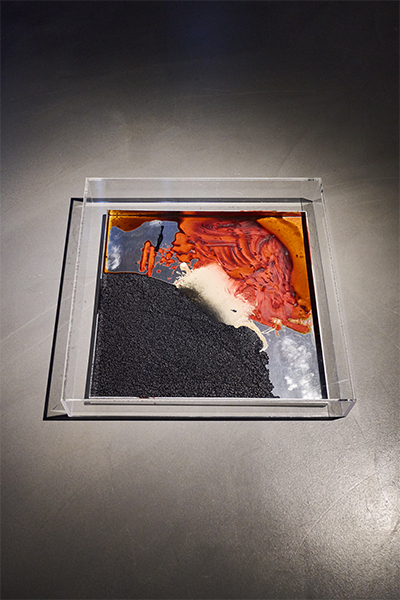
Mang began with a work that the artist himself thought he had “ruined.”
The color did not turn out as he had intended, and without even the energy to clear away the work, he left it as it was and walked away. Over time, however, Jeju’s high humidity caused the ottchil to change on its own, creating a new surface that the artist had not expected.
Although such changes might be considered failures by the standards of traditional ottchil craft, Kim Chang-ok discovered an unintended beauty in the surface.
The work continued to change under sunlight and humidity, creating new images on its own, almost like a living organism.
Mang suggests that even in moments when something feels ruined, life and the work do not end, and that the traces left behind may appear beautiful when seen from another perspective.

