


Please use earphones inside the exhibition hall.
Jeongnang
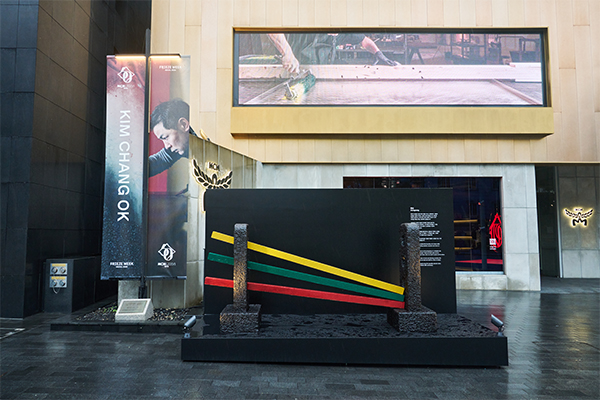
Jeju’s jeongnang were horizontal wooden bars that marked the boundary between the inside and outside of a home, while also serving as a quiet means of communication. Depending on how the bars were arranged, they indicated whether someone was at home, briefly away, or gone for a longer period.
Kim Chang-ok has often spoken of the principle of the jeongnang as a metaphor for the “space of the mind.” There are times when we are open to welcoming others, and times when we need to spend some time alone.
The jeongnang reminds us to first recognize the state of our own mind and allow ourselves the distance and time we need. At times, pausing to protect ourselves and accepting our feelings as they are can itself become a form of solace.


00:00
01:50
07
Jeongnang